
October 2025 | Campaigns
In 2025, Decide Campaigns undertook one of its most ambitious experiments: helping build two new municipal political parties in Alberta's largest cities.
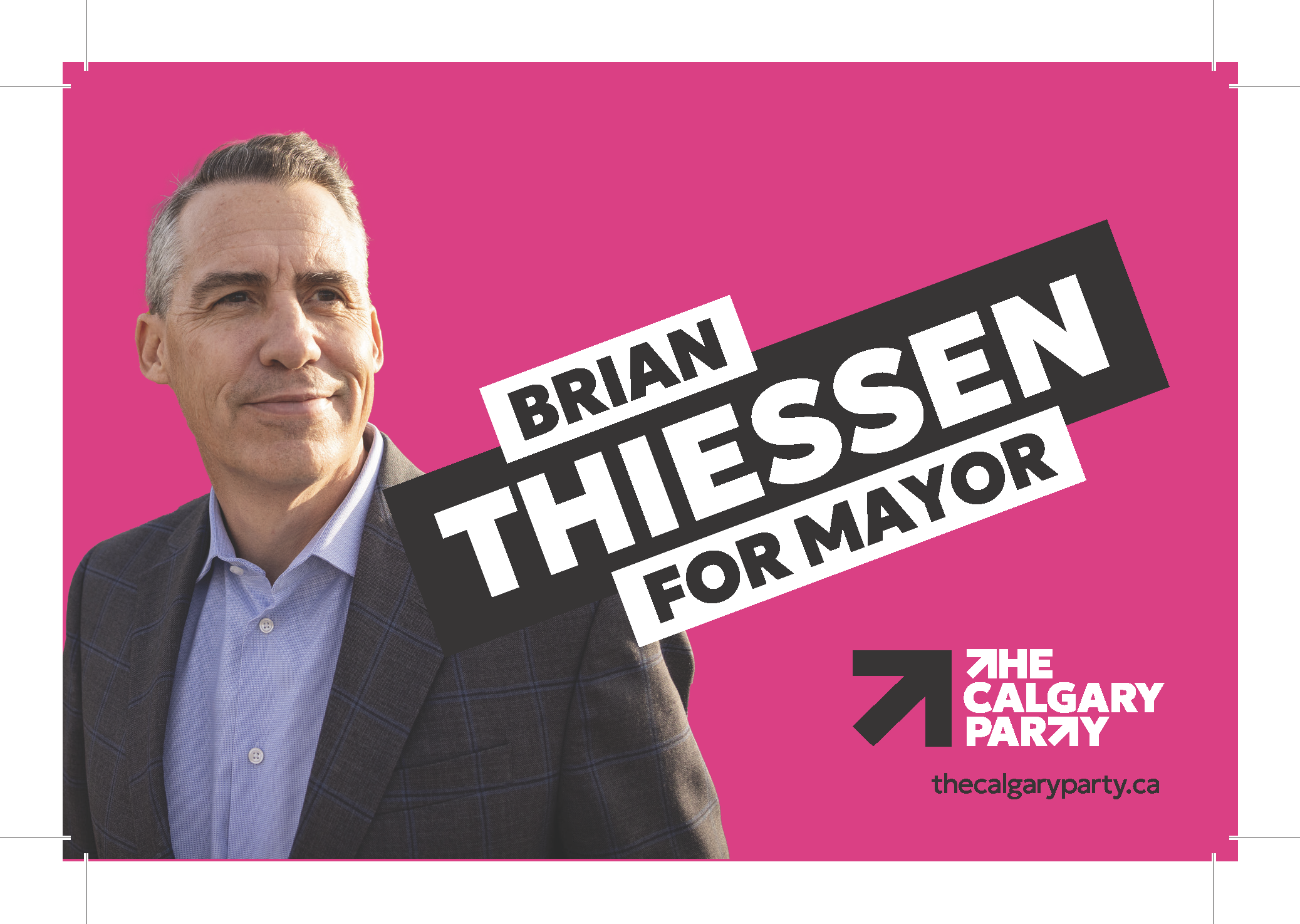
The Calgary Party, led by mayoral candidate Brian Thiessen, and Better Edmonton, led by Tim Cartmell, represented an opportunity to rethink how municipal election campaigns are organized, financed and executed.
Municipal politics in Alberta had traditionally been dominated by independent candidates. New provincial legislation created an opportunity to introduce political parties into Calgary and Edmonton's municipal elections.
We wanted to see whether the advantages of a political party could be applied successfully to municipal politics.
Could a shared brand help candidates build recognition? Could centralized fundraising, research, communications and campaign management create efficiencies? Could a common policy platform give voters a clearer understanding of what a group of candidates stood for?
And could we build organizations that would last beyond a single election?
We spent much of 2025 trying to answer those questions.
In Calgary, we helped build a party with a full slate of candidates, a common policy platform and a coordinated campaign organization. In Edmonton, we worked with Tim Cartmell and Better Edmonton to develop a city-wide campaign alongside a team of council candidates.
Both campaigns required building new political organizations while simultaneously competing in an election.
The results were mixed.
Better Edmonton elected three councillors. The Calgary Party elected one. But neither Tim Cartmell nor Brian Thiessen was elected mayor.
We didn't achieve our principal objective.
There were successes along the way. We recruited candidates, developed policies, built campaign infrastructure and introduced new approaches to municipal political organizing.
But we also learned how difficult it is to establish a new political brand while asking voters to support candidates they may know primarily as individuals.
Municipal voters have longstanding relationships with local candidates. Those relationships don't automatically transfer to a political party. And a shared brand doesn't necessarily mean that support for one candidate translates into support for another.
We also learned that building a party and running an election campaign are two different organizational challenges. Doing both simultaneously requires significant resources, discipline and time.
Perhaps most importantly, we learned that the advantages of a political party aren't necessarily obvious to voters simply because they're obvious to campaign organizers.
Ultimately, the experiment fell short of our ambitions.
But campaigns are opportunities to test assumptions, challenge conventional wisdom and learn how people make decisions.
The experience of building The Calgary Party and Better Edmonton has added considerably to our understanding of municipal politics, political organization and campaign strategy.
We didn't win the elections we set out to win.
We learned a tremendous amount about what it takes to build something new.
And those lessons will inform the campaigns we build next.